Showing posts with label devcorner. Show all posts

Friday, September 30, 2011

Cross-Language Community(?)

It recently came to my attention that over 24% of Simutrans forum posts are in languages other than English. Some posts (including a few jokes) later FreeGameDev had its first non-English board.


Simutrans Forum Post Languages

Should we really have a section on our board for non-English languages?


Pro:
  • Lurkers who would not post in English would have the chance to contribute in the international forum
  • Engaged non-English-speakers are likely to improve English skills over time, attracted by the larger community

Con:
  • People who might give English a try to contribute will use the international forum out of comfort instead, decreasaing growth of the English-speaking community
  • People who use English now, will use the international forum and contribute less to the English-speaking community
  • Moderators need to be found
It could also be that there will be no effect at all. We will add non-English forums if we find volunteer moderators as an experiment for a while and see where this leads us (few more details here).

If you would like to help moderate a language forum, please let us know in this thread.


English language map of the non-primarily English-speaking world [source by-nc-nd]

Sunday, September 11, 2011

Summer Shorts 2 + Screens

Unknown Horizons Player Scores...

gscai of the real-time colony building simulation Unknown horizons wrote a short player-view summary of how the game's artificial intelligence works.

libtcod's project browser filter

libtcod, an advanced toolkit for roguelikes now has an online browser for projects using it that allows to apply filters.

Tactical battle in Hale

I stumbled over Hale, an RPG described as having "deep tactical combat system and storyline".

The project seems to use freely licensed assets, which is a great. I hope that the GUI will receive a makeover (using a pastel background color and killing the 1995'ish 3d button/border look does wonders).

Example sound visualization at Freesound 2.0

Freesound went 2.0! CC-BY and CC0 as license options! (Unfortunately CC-BY-NC as well). Sampling+ remains for legacy sounds where authors have not switched to a modern license. Read the announcement here.

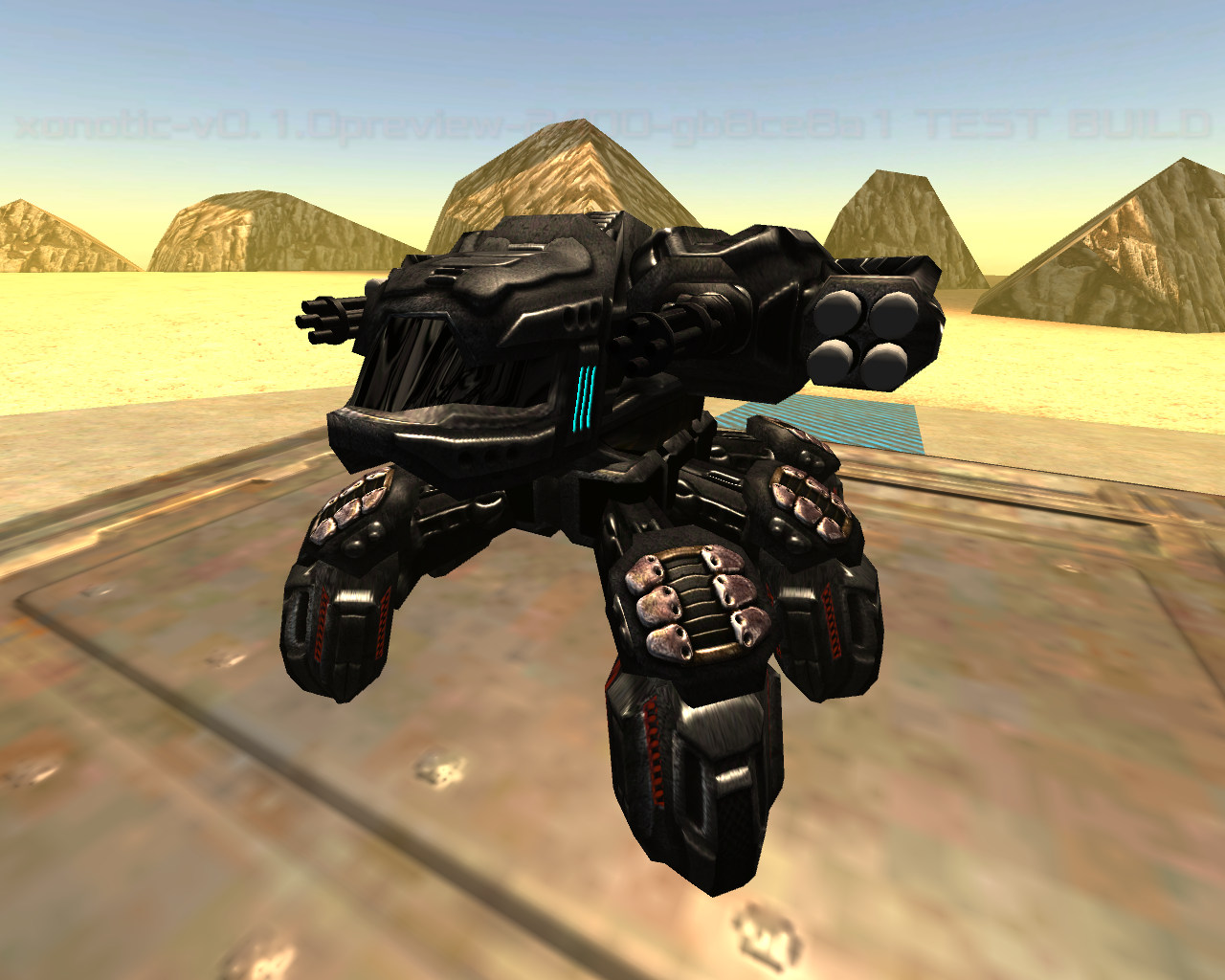
Quadruped in Xonotic

Xonotic 0.5 brings new maps, vehicles and multi-language support. Many more details can be found in their annoucnement post.

Tuesday, September 6, 2011

DungeonHack/Godhead Demo Ultimatum

DungeonHack aka Godhead imposed an ultimatum on itself: two weeks for finishing a gameplay demo using the Lips of Suna engine.


Should the demo not be finished by that time, the development team will commit Seppuku.

Just kidding. :)

It's refreshing to see an open project put some pressure on itself. I'm looking forward to the results of this.

Monday, August 22, 2011

News Shorts

OpenPatrician is a not-yet-playable free implementation in Java of Ascaron's classic The Patrician and The Patrician 2. There are some assets but unfortunately the project's default license is a noncommercial one.

OpenMW is moving forward: new blog look, renderer is being refractored, inventory being implemented, record saving too.

Alex the Allegator was part-ported to HTML5 using the melonJS library. I'm #9 on the high score at time of post! :D

DusteD, maker of Wizznic! is not dead.

Blendswap now has a slim set of rules for contributors and texture licenses are annoying.

Bandit Racer is a car racing and combat game in HTML5, built with GameJS. Comes with track editor and pretty UI. An earlier version multiplayer mode, which will probably come back sooner or later

Tuesday, August 16, 2011

On OpenGameArt 2 and FreeSound 2

This is old news: OpenGameArt 2 launched and with it an improved interface for browsing and submitting freely licensed game art. Testing, feedback and submissions welcome of course. :)

OpenGameArt 2 submission form

FreeSound is also moving forward, away from FTP-submissions, away from CC-Sampling+, although it seems that noncommercial licenses will be supported. A beta of the new site is open for public testing!

FreeSound 2 submission form - the upload button is flash...

A very curious feature is the "bulk license change", which is what you see first when logging into FreeSound 2:

FreeSound Bulk License Change

If you're a FreeSound contributor, please log into the new site and select CC0 or CC-BY.

I finally got hold of a video of OpenGameArt's admin BartK talking about his site at Libre Graphics Meeting May 2011:


Does any of these submission forms scare you away? Did you notice an obvious interface design mistake? Got any libre art sharing news to spread? Let us know in the comments!

Monday, August 8, 2011

Open Source in Humble Indie Bundle #3: Haaf's Game Engine (HGE)

HGE's Particle Editor

The proprietary games sale Humble Indie Bundle has a tradition of including open source engine releases.
In all of the other humble bundles there has always been at least one game that opened its source (in #2 it was revenge of the titans. in #1 it was penumbra, lugaru, aquaria and gish).
- Fer C.

Bundle #3 is soon over and the *nix port of the Windows-only zlib-licensed engine HGE has been now released as open source as well. It is the engine used by Hammerfight from the Bundle. Visit the pages: hge, hge-unix.

The non-free BASS audio library was replaced with OpenAL.

The hge-unix readme states "10 I don't know anything about the Windows version of HGE.", which might mean that developers have to juggle two engine versions and audio libraries if they want to support the three main platforms. Or hge-unix needs to be ported back to windows systems.

You can read more about the port in the blog post HGE comes to Mac and Linux by Ryan Gordon aka icculus. Or perhaps watch his talk about Linux/open source gaming (again?).

Monday, June 6, 2011

Battle for Wesnoth Architecture

The popular open source game Battle for Wesnoth has been featured in the new free online book The Architecture of Open Source Applications.

We believe that the beauty of the Battle for Wesnoth as a program is how it made coding accessible to a wide variety of individuals. To achieve this aim, the project often made compromises that do not look elegant whatsoever in the code. It should be noted that many of the project's more talented programmers frown upon WML for its inefficient syntax. Yet this compromise enabled one of the project's greatest successes. Today Wesnoth can boast of hundreds of user-made campaigns and eras, created mostly by users with little or no programming experience.

Read the full section online for further insight into the design and design decisions of Battle for Wesnoth.

Monday, February 28, 2011

Dev-Corner: the challenges of developing long, plot-heavy FOSS games

Xenogear: Fighting Elly's Gear

Xenogears is one of my favorite games of all time. For those of you who are unfamiliar with it, it was a Japanese RPG for the Sony PS1 in 1998. Not everyone agrees that it was an amazing game, but it's undeniably one of the longest, most plot-heavy RPGs ever made, especially given the fact that most of the plot is in the form of the main story line as opposed to random side-quests that have very little to do with the overall goal. Xenogears is particularly interesting in that each time you play it through, you'll pick up more and more little plot details that you missed the first time around. This is because not only does it have a massive main plot, it also has a massive back story spanning several thousand years, which is only really revealed in small details that are only apparent once you're already familiar with the main plot.

By this time, some of you are probably wondering why I'm raving about a proprietary console game on a FOSS gaming blog. Well, there's another interesting fact about Xenogears that makes it very relevant to the topic of developing games with long, linear plots: it was never really finished. There's all sorts of speculation as to why this might have been; my own pet theory is that upper management decided they'd been waiting too long and paying too much, cut the project short, and told them to shove it out the door as-is. This becomes very apparent when you reach the second half of the game -- it goes very abruptly from a deep, plot-heavy game to an irritating scene where they briefly summarize massive amounts of plot that would have added about thirty to fifty hours of gameplay, before finally releasing you back out into the world to do a few last quests and fight the final boss.

So Xenogears, the Unfinished Symphony of JRPGs, is as example of two really important points:
  • It's difficult to predict the real scope of a project until after you've already committed to it, and...
  • Even big teams with large amounts of money often have trouble finishing ambitious projects in a timely fashion.
Painfully, these issues apply in even greater force to non-commercial game projects (a category that the vast majority of FOSS game projects fall into). On average, FOSS developers tend to have less time and be less reliable than people working on large, proprietary, commercial projects. This isn't because they're less reliable people in general, but because they're real people with real day jobs who are largely doing their FOSS coding work on a volunteer basis. Hence, developers and artists tend to come and go, and even when they're with the project for a long time, they tend to have a wildly variable amount of time that they're able to devote to it, depending on what else is going on in their lives. As such, maintaining a level of coding an artistic consistently equal to that of a large, heavily funded project is a tremendous challenge, because in general you're working with smaller units of work from a much larger team.

So as I see it, if we as FOSS developers want to create the sort of plot-heavy games that I'm referring to (be they JRPGs or whatever else), the odds are stacked against us from the outset. So here's what I'd like to discuss:

FOSS software development undeniably has certain strengths that closed development lacks -- the sheer volume of ideas, as well as the fact that, since FOSS development is primarily done on a volunteer basis, you aren't limited by time or budget in the traditional sense -- your project can continue as long as people remain interested and dedicated, and there's no one in upper management to tell you it's time to throw away your efforts. With this in mind, I'd like to pose some questions for everyone, and hopefully get some discussion going:
  • How can we, as a community, apply these strengths to the sort of project that requires a large development team and a grand, unifying vision?
  • How do you go about convincing a large number of people to join an ambitious project? As someone who has been following FOSS game development for quite a while now, overly ambitious projects tend to make me very skeptical. How do you overcome this skepticism and convince people to help you out, if you're dealing with the sort of project where it's not practical to start small?
  • Once people are on board, how do you keep the quality consistent? How do you keep a ton of people interested in working on a grand plot line that's already been fleshed out essentially from start to finish? FOSS developers need (and deserve) to give input to the projects they're helping with. How do you maintain a vision while simultaneously leaving room for input?
  • One bit of advice I find myself giving out over and over is not to be too ambitious to start with. Sometimes, though, you need to be ambitious in order to make a project work. How can you divide things up in such a way that you can be ambitious yet still start small enough to get your project going?
Anyway, I'm serious about these questions. I've been giving ambitious projects (not a particular ambitious project, but rather the idea of them in general) a lot of thought lately, and I'm hoping that maybe we can put our heads together as a community and come up with some sort of strategy for tackling them.

I'd love to hear your thoughts!

Peace,

Bart K
Founder, OpenGameArt.org

Saturday, February 19, 2011

Dev-corner: m64's Development Lessons and Agile in Free Open Source Game Development

In his first Lessons from Bulletstorm post, m64 talks about the importance of Level Design, Editors, Core Gameplay and Mechanics Tweaking for open source games (although most is general gamedev related).
First, a disclaimer – Bulletstorm is a big, single-player heavy, action game. If your game is different, the observations might not apply. Some observations are shaped by how Unreal Engine 3 works and might not be easily applicable to games created with other engines. Some might be difficult to apply due to technical limitations of an Open Source process – like having to exchange data through the Internet. Without any further ado, here goes.
Speaking of development: PARPG is doing an Agile/Scrum-style one-month sprint. This means that the whole team is working towards a handful of goals and that there are 30-minutes progress and planning reports twice a week [announcement]. The main theme of this development month is "Player Character Creation".

I'm currently contributing as UI designer on the project and am very motivated by the feeling of 'single-mind development' - the knowledge that man people from different spheres work on one main task at a time. It's great to know that not only I finish a design task but that it's going to be working in-game soon.

One of the mockups I produced during the sprint [more mockups]

Please note that this is not a one man's work. I actually created no part of this image but only drew some lines and moved around existing images by other artists! See this file for a list of the work in the mockup.

Do you consider m64's suggestions relevant to free game dev? Are there any principles/structures you have seen in foss game projects that improved development? What do you think of applying Scrum to open source games?

Sunday, January 30, 2011

Dev-corner: Primer to modelling with Wings3D

Today I would like to start a new regular (?) feature here on FreeGamer: The Dev-corner!

As you should know by now FreeGamer is all about FOSS games, and of course the most important part of the FOSS development model is participation! So, yes that also means you! Yes you... don't think I am not seeing you... and don't switch to that other browser tab to hide from me ;)


So with the new dev-corner we will try give you some easy introductions how to participate in FOSS game development, maybe do some more development focused developer interviews and so on. I also hope to get some guest bloggers to write an introduction into contributing to their projects or something like that... so if you are a developer interested in this contact us :)


So what can I do?


You though about contributing to a project already, but are not much of a programmer guy/gal? Well... there is an artist in all of us (it's in our genes the anthropologists say)!

But getting started with that can be a bit scary... 2D art is of course an option, but the learning slope is steep there, as for a long time everything you draw will look like crap (trust me, I am still in that phase also). But if you are interested in that there are a few pretty good FOSS tools for that (we will do a dev-corner on that some other time).


3D art on the other hand is more accessible, especially if you are not a born artist! You can make some pretty awesome (albeit simple) art in the first few days of learning, and you will certainly not have the feeling of "ahh... this is all crap" like you will have with 2D art. Oh and non-computer people will be amazed by your l337 computa skillz ;)


But who am I kidding here... you probably downloaded Blender (or another non FOSS modeling application) already, and the complexity of the programs made your head spin, right? Yes... those are full modeling suits meant for experienced professionals, and can do much more than you will ever need for FOSS game development. But don't get scared away by this... there are other options and once you got the basics concepts, Blender and the like will suddenly appear much less scary and actually quite easy to use ;)


The maybe easiest 3D modeling application is Google's Sketch-up, but due to it's non-FOSS nature and the severe limitations in what it can do, we will not go into much detail here... but have a look at it if you like to get some simple models done fast.


Primer to Wings3D modeling


There is another really great FOSS modeling application next to the all over shadowing Blender however: Wings3D!
It is not a full 3D suite, however and only focuses on the modeling and texturing part. In those parts it is generally accepted however that it is among the best of all programs out there (FOSS or non-FOSS)! So head over to their new website and get the latest version 1.4 now!

Now, the advantage of limiting the program's feature scope is it's much less cluttered interface and the quite a bit lower learning curve for the beginners. But don't get me wrong... it's not a beginners toy (like Google's sketch-up); Wings3D is capable of everything you will need for even the most professional models!


Have a look at this video to get an first idea what to do (I suggest you to use Blender camera style movement ;) ):


More video tutorials like this you can find on the Wings3D Youtube channel, and other nice tutorials here and a user manual here.

One of the especially helpful features of Wings3D is that all menus are context sensitive, so you will only see the options that make sense to use at that time. Also all features are available through the menus and are not hidden behind obscure keyboard short-cuts like in Blender (but you can fully customize all commands to shortcuts in Wings3D to speed up your work-flow). And last but not least... at the bottom status bar you can always tell what options are available with each tool upon different mouse and button combinations... so it is very easy even for the beginners.


However due to the way model data is set up in Wings3D, it is really geared towards box-modeling, e.g. a standard work-flow approach that works by extruding features from a single original box, instead of shaping the model from individual polygons (like normally preferred in Blender)... but don't get scared by this tech-babble ;) It's the better and easier way anyways, and just think of it as if working with a real-life clay model.


Ok I got the basics, where do I start contributing?


Well you could of course look for a FOSS game directly... and there will be for sure plenty of projects happy to have you helping out. But as a beginner you can also first practice a bit more. A good option for that would be for example to participate in the weekly challenges over at OpenGameArt.org. There you have a simple topic every week and you can also discuss with other 3D artist about techniques and so on. Definitely a great way of practicing.

Oh and one last word of caution: You might realize at some point that making 3D models and contributing to game development is actually more fun than playing games... but don't say I didn't warn you ;)

Blog Archive